This article aims to provide crucial insights and information about heating or AC installation. Understanding these key aspects can help make informed decisions and ensure a smooth installation process.
Proper preparation and knowledge are essential to maximize the efficiency and longevity of your HVAC systems. With the right approach, homeowners can save time and money and prevent potential installation issues. Whether you’re facing the sweltering heat or the chilling cold, a reliable HVAC system is paramount for comfort in any home.
Consider Key Factors Before AC Installation
When it comes to AC installation, several critical factors must be considered to ensure success. Firstly, the size of the unit is crucial; an improperly sized unit can lead to inefficiency and increased energy bills. Homeowners should consider the climate, size, and orientation of their home to determine the appropriate size. Additionally, evaluating energy efficiency ratings can lead to long-term savings, making it pivotal to select units with high SEER (Seasonal Energy Efficiency Ratio) ratings. Consulting with professional contractors can provide valuable insights and prevent costly mistakes during the AC installation.
Cost is another significant factor that influences the decision-making process. The initial purchase price is not the only expense to worry about, as installation fees and potential retrofitting costs can add up. It’s important to balance cost with quality, and choosing an established, reliable brand can offer peace of mind. Consider exploring various financing plans or potential government rebates to alleviate financial burdens. Furthermore, a detailed cost-benefit analysis will help in selecting an installation that fits both your budget and comfort needs.
Lastly, homeowners should research local regulations and company warranties before proceeding with the installation. Some regions may have specific zoning laws or noise ordinances affecting HVAC installations. Additionally, understanding the warranty options is crucial for ongoing maintenance and unexpected repairs. A comprehensive warranty can save high costs in the case of unforeseen breakdowns. Using a reputable service provider will ensure adherence to local codes and provide reliable installation services.
Prepare Your Home for the Installation
Preparing your home for an AC installation involves more than just selecting the right unit. Start by clearing the installation area of any obstacles to ensure technicians have easy access. Adequate space should be allocated for both indoor and outdoor units, aligning with the manufacturer’s specifications. Checking that your electrical system is compatible with the new unit’s requirements is also vital. Doing so can help avoid disruptions during the installation process and ensure everything runs smoothly.
Next, it’s worth considering conducting an energy audit before installation. An energy audit helps identify areas of the home that may benefit from improved insulation or sealing. Proper insulation can significantly enhance the efficiency of your new HVAC system, reducing energy costs over time. Changes in weather highlight the importance of energy efficiency, making it a worthwhile investment. Addressing these concerns beforehand allows for a more efficient system that maximizes comfort throughout the year.
Finally, homeowners should schedule enough time for the installation process. This includes understanding that installation might take longer than expected, especially if complications arise. Clear communication with your installation team will minimize surprises and ensure you are adequately prepared for any downtime. Pre-planning will ensure that the installation interferes as little as possible with your daily routine. Therefore, it’s highly beneficial to set aside a full day or even two to accommodate the entire process seamlessly.
Understand the Installation Process
Understanding the various stages of AC installation helps in setting realistic expectations. Initially, technicians will conduct a pre-installation inspection to identify any potential problems, ensuring that the new system will be compatible with the home’s existing infrastructure. This step involves checking ductwork, electrical systems, and space allocations. Homeowners should anticipate that technicians will discuss any pre-existing issues and may recommend repairs or adjustments to optimize performance. The clarity of communication during this phase directly affects the overall success of the project.
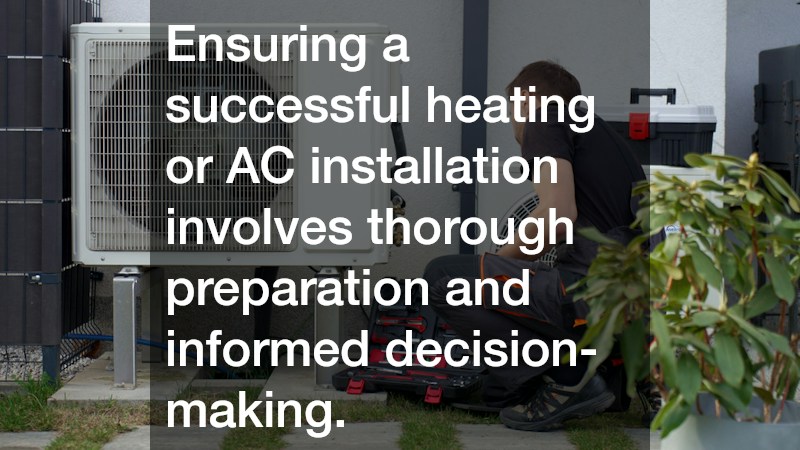
The installation itself typically follows a structured process involving removal of old equipment, placement, and securing the new units. In regions where weather can be unpredictable, ensuring that outdoor units are properly secured is crucial to prevent weather-related damage. Technicians will carefully install and seal indoor components to ensure safety and efficiency.
Ensuring a successful heating or AC installation involves thorough preparation and informed decision-making. By considering these factors and questions, homeowners can enjoy a seamless installation experience and optimal system performance. Proper planning and understanding of the process can significantly enhance the longevity and efficiency of your HVAC system.