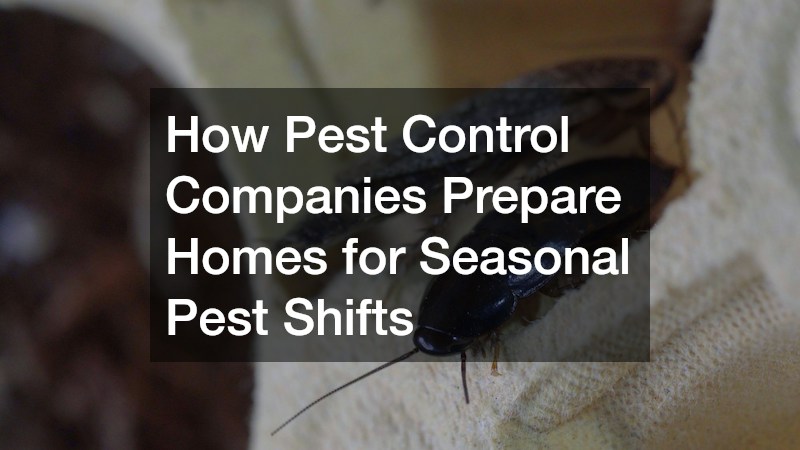
Seasonal environmental shifts trigger predictable behavioral changes in pest populations. As ambient temperatures, humidity levels, and food availability fluctuate throughout the year, insects and rodents alter their nesting, foraging, and mating habits. Professional pest control companies utilize Integrated Pest Management (IPM) strategies to anticipate these seasonal migrations. By combining thorough structural inspections, habitat modification, barrier applications, and exclusion techniques, pest management professionals protect residential properties from seasonal pest invasions year-round.
Understanding the Seasonal Pest Life Cycle
Winter: Shelter Seeking and Rodent Exclusion
When outdoor temperatures drop, pests seek warmth, moisture, and shelter inside climate-controlled structures:
-
Rodents (Mice and Rats): Rodents can squeeze through entry points as small as a quarter-inch. Once inside, they gnaw through drywall, insulation, and electrical wiring, creating fire hazards and contaminating surfaces.
-
Overwintering Insects: Pests like stink bugs, boxelder bugs, Asian lady beetles, spiders, and cockroaches retreat into wall voids, attics, and basements to undergo diapause (a state of suspended development).
-
Professional Protocols: Winter services focus heavily on interior monitoring, rodent trapping, and structural exclusion—sealing cracks, installing door sweeps, and capping exterior vent lines.
Spring: Emerging Swarms and Colony Expansion
Rising temperatures and spring rains trigger reproductive cycles and foraging activity:
-
Subterranean Termites: Spring rains prompt termite colonies to produce winged “swarming” reproductives seeking sites to establish new colonies, posing severe structural risks to wooden framing.
-
Ants and Stinging Insects: Carpenter ants, pavement ants, and queen wasps emerge from winter dormancy to forge new nests, aggressively searching for moisture and sugar sources.
-
Professional Protocols: Technicians focus on perimeter liquid soil barriers, applying slow-acting non-repellent termiticides, and destroying incipient nests before colonies mature.
Summer and Fall: Peak Activity and Overwintering Preparation
Mid-to-late year environmental conditions drive pest populations to their highest volume:
-
Summer Nuisance Pests: Mosquitoes, fleas, ticks, and stinging hornets reach peak population density. Mosquitoes breed rapidly in standing water, while wasps build aggressive paper nests around eaves and soffits.
-
Fall Ingress: As daylight hours shorten, pests like cluster flies, field mice, and spiders begin actively searching exterior home foundations for heat signatures, preparing to move indoors before the first freeze.
-
Professional Protocols: Summer services emphasize outdoor liquid residual sprays, granular baiting, and micro-encapsulated barrier treatments applied along exterior perimeters.
Professional Inspection Methodologies
Specialized Diagnostic Tools
-
Thermal Imaging Cameras: Detect temperature differentials behind sheetrock, revealing hidden moisture leaks, thermal loss, or active rodent and insect colonies inside wall voids without invasive demolition.
-
Moisture Meters: Identify elevated relative humidity levels in crawlspaces, basements, and sill plates that attract wood-destroying organisms like termites and carpenter ants.
-
UV Flashlights: Reveal fluorescent rodent urine trails, tracking powders, and pheromone pathways along baseboards and structural beams.
Habitat and Vulnerability Analysis
Technicians inspect high-risk interior and exterior areas, including crawlspaces, attic insulation, soffit vents, utility pipe penetrations, and outdoor landscaping. Dense vegetation touching exterior siding or improper soil-to-wood contact provides direct bridges for foraging pests to cross into the home.
Core Preventive Measures and Barrier Implementations
Pest control professionals rely on physical exclusion, habitat alteration, and chemical barriers to establish a multi-layered defense envelope around the property.
-
Outdoor Habitat Modification: Clearing clogged rain gutters, trimming tree branches away from rooflines, and removing standing water sources to eliminate breeding zones.
-
Exterior Chemical Barrier Application: Applying micro-encapsulated liquid residuals and slow-release granular perimeter baits around the foundation wall to intercept migrating insects.
-
Physical Structural Exclusion: Sealing foundation cracks, expansion joints, and utility penetrations using commercial silicone caulk, copper mesh, door sweeps, and ridge vent caps.
-
Interior Monitoring and Trapping: Placing glue boards, sticky insect monitors, and mechanical rodent traps in basements, attics, and utility rooms to catch early intruders.
Physical Exclusion Techniques
Sealing structural gaps eliminates pest entry pathways before infestations occur:
-
Exclusion Materials: Technicians seal foundation cracks, expansion joints, and utility line penetrations using expanding polyurethane foam, commercial silicone caulk, and rust-proof copper mesh or steel wool (which rodents cannot chew through).
-
Mechanical Barriers: Installing heavy-duty brush door sweeps, repairing window screens, and capping attic ridge vents with galvanized hardware cloth prevents pest ingress.
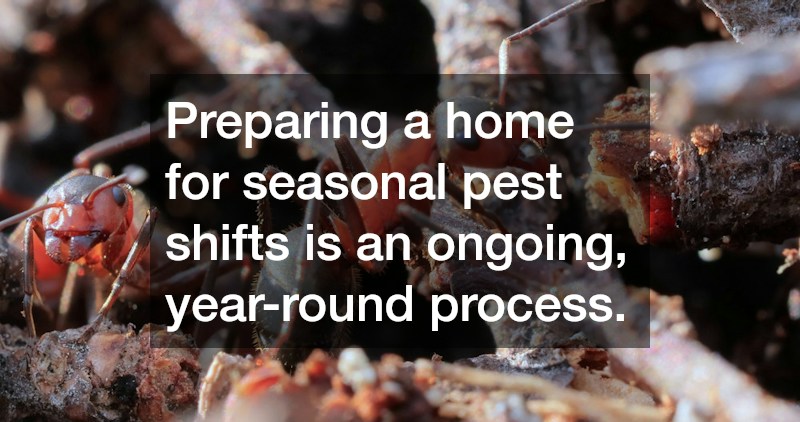
Preparing a home for seasonal pest shifts is an ongoing, year-round process that balances science, structural maintenance, and strategic timing. By leveraging specialized diagnostic tools, executing precise physical exclusion, applying targeted barrier treatments, and maintaining clear communication with homeowners, professional pest control companies in Clearwater, FL effectively neutralize pest threats before they cross the threshold. Proactive, seasonal management protects property investments, preserves indoor air quality, and ensures a safe, pest-free living environment across every season.